
The Rising Interest in a Wealth Tax
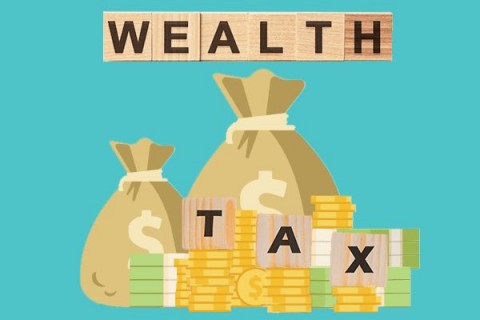
After years of talk, a powerful head of steam is building behind the idea of a wealth tax on the very rich. Could it actually happen?
While President Biden didn’t include it as a funding mechanism in his new $2 trillion infrastructure plan, White House press secretary Jen Psaki earlier in March pointedly refused to rule it out as part of a larger tax reform package. “Middle-class families are paying more than their fair share,” she said, echoing a favorite Biden talking point. “And those at the top are not doing their part.” Fanning the flames is new research suggesting that the top 1% illegally evade billions of dollars in federal income tax.
A wealth tax is fundamentally different from income tax. It taxes the value of an individual’s net assets—typically including cars, homes, stocks, businesses, real estate, paintings, copyrights, and almost anything else, tangible or intangible, of value. The assets are “net” because their value is reduced by the individual’s debt; the taxpayer must pay a percentage of the net assets’ value every year.
Sen. Elizabeth Warren (D-Mass.) recently reintroduced a wealth tax bill that would impose a 2% annual levy on net assets between $50 million and $1 billion, plus 3% on net assets above $1 billion. If the U.S. adopts a single-payer health care system, the levy on billionaires would double to 6%.
Warren’s bill by itself is no surprise; she has been pushing for a wealth tax since her 2019 presidential run. But the idea seems to be catching on. Seven California state assembly members have recently started the process of amending the state constitution to permit a wealth tax (1% on net assets between $50 million and $1 billion; 1.5% on assets above $1 billion). Washington state legislators have introduced a bill to impose a wealth tax. The Australian Greens Party last weekend called for a 6% levy on the assets of billionaires, and South Africa’s government has been considering a wealth tax.
(Oleh - HR1)Tags :
#PajakPostingan Terkait





Benahi Masalah Fundamental
Artikel Populer
-

-

Tekan Inflasi, Pasar Murah
04 Jan 2025 -

Tapera Beri Angin Segar Emiten Perbankan
05 Jun 2024 -

Ledakan Smelter Berulang, Optimalkan Pengawasan
28 Dec 2023 -

KISAH SEGITIGA ANTARA VIETNAM, CHINA, DAN AS
28 Dec 2023